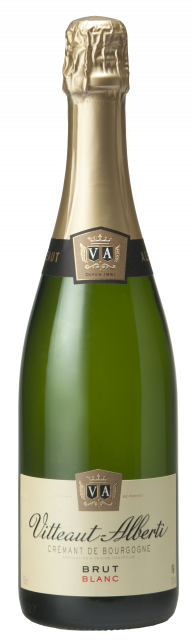
Presentation
Based in Rully, at the heart of the Côte Chalonnaise, Maison Vitteaut-Alberti has embodied excellence in Crémant de Bourgogne since 1951. Founded by Lucien Vitteaut and his wife, née Alberti, the estate was one of the first in Burgundy to devote itself exclusively to the production of sparkling wines using the traditional method.
Across 22 hectares spread over the finest slopes of the Côte Chalonnaise and the Hautes-Côtes de Beaune, the family cultivates the region’s emblematic grape varieties: Chardonnay, Pinot Noir and Aligoté. Each plot is managed with respect for natural balances, with particular attention paid to ripeness, aromatic finesse and freshness—key elements in the production of great Crémants.
The estate’s range stands out for its elegance and precision: from the Brut Tradition, the historic signature of the house, to more ambitious cuvées such as Brut Rosé, Blanc de Blancs and the Vintage cuvée, each wine reflects a constant search for balance between tension, fine bubbles and aromatic expression. Extended ageing on lees consistently brings complexity and texture to the wines, allowing them to rival the finest sparkling wines.
Passed down from generation to generation, the estate is now run by Agnès Vitteaut, who continues the work of her predecessors with both rigor and modernity. The house is also distinguished by the family’s long-standing commitment: Gérard Vitteaut, son of the founders, played an active role in drafting the decree establishing the Crémant de Bourgogne AOC in 1975, early on affirming the estate’s vocation to become a benchmark in this category.
At the crossroads of family tradition and a strong oenological commitment, Maison Vitteaut-Alberti offers a singular vision of Crémant de Bourgogne: wines of character, sincere and terroir-driven, shaped by a true family history.
Location
Maison Vitteaut-Alberti is located in Rully, at the heart of the Côte Chalonnaise, a historic area for the production of Crémant de Bourgogne. The parcels used for the Crémant Blanc Brut are spread across Rully, Mercurey, the Côte de Beaune and the Hautes-Côtes, offering a wide diversity of terroirs and exposures. These slopes benefit from a continental climate, with cool nights at the end of the season that preserve the grapes’ natural acidity and aromatic freshness. This precise vineyard sourcing enables the estate to harvest grapes perfectly suited to the production of high-quality sparkling wines.
Terroir
The soils are predominantly clay-limestone, typical of Burgundy’s vineyards, with variations depending on the area: gravelly, marly or deeper soils. This type of terroir allows for good water regulation and encourages the expression of Chardonnay, the main grape variety in the Crémant Blanc Brut. Other grape varieties such as Pinot Noir or Aligoté may complement the blend depending on the vintage, bringing structure and liveliness. The result is a balanced wine with fine bubbles, marked by elegant minerality and a lively tension on the palate.
In the vineyard
Vineyard management is based on sustainable viticultural practices that respect the natural balance of the vine and the terroir. Soil cultivation and close monitoring of the vine’s growth cycle encourage an authentic expression of the clay-limestone soils and ensure optimal grape ripeness.
Yield control is an integral part of this quality-driven approach. Careful management of crop load is implemented to concentrate aromas and preserve the wine’s natural freshness. This approach guarantees the production of a balanced, precise and elegant Crémant.
Harvest
Harvesting is carried out by hand to preserve the integrity of the bunches and allow for rigorous sorting directly in the vineyard. The grapes are transported in small crates to prevent premature crushing. Picking takes place relatively early in the season, often between late August and early September, in order to preserve natural acidity and aromatic freshness. This level of precision is essential for producing balanced base wines suitable for a second fermentation in bottle.
Winemaking
Vinification is carried out according to the traditional method. After gentle pressing, the juices are clarified and fermented to produce the base wines. A complete malolactic fermentation is carried out, bringing roundness and suppleness while maintaining the tension and freshness characteristic of Burgundy terroirs. The wines are then precisely blended before bottling for the second fermentation.
Ageing
The Crémant Blanc Brut is then aged on lees for at least 16 months, allowing the development of fine, regular bubbles and elegant aromas of white flowers, ripe fruit and lightly brioched notes. On the palate, it combines freshness, balance and finesse.
Varietals
Chardonnay
Pinot Noir
Aligoté
Gamay
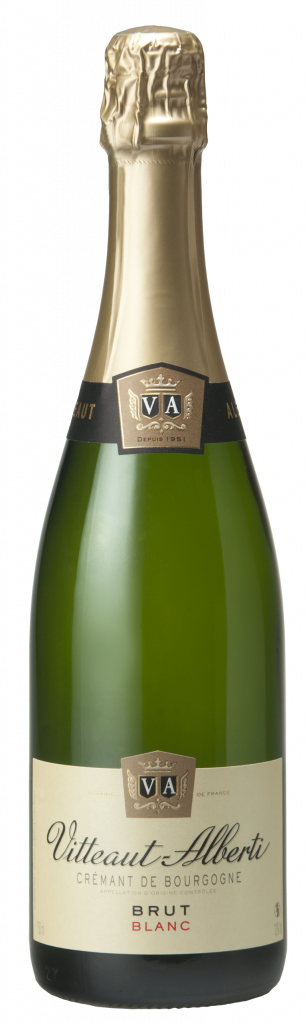
Serving
Serve between 6 and 8°C.
Ageing potential
3 to 5 years
Tasting
Bright pale yellow in color, enlivened by a fine and steady effervescence. The nose opens with delicate aromas of white flowers, green apple and yellow-fleshed fruits, enhanced by subtle brioche notes resulting from extended lees ageing. On the palate, the attack is lively and fresh, driven by bright natural acidity. The bubbles are elegant and well integrated, bringing tension and finesse. The overall impression is harmonious, with a clean, lemony and slightly mineral finish. This Crémant de Bourgogne stands out for its balance, precision and ability to accompany both an aperitif and refined dishes based on fish or seafood.
Taste profile
Vins blancs frais
Food pairings
With its freshness, fine bubbles and balance, the Crémant de Bourgogne Blanc Brut from Vitteaut-Alberti lends itself to a wide range of gourmet pairings, from aperitif to dessert. It pairs perfectly with delicate and refined dishes, never overpowering flavors. On the savory side, it works beautifully with a sea bream tartare with citrus, where its liveliness highlights the freshness of the fish. It also pairs very well with poultry served with morel mushrooms and a light cream sauce, balancing the richness of the dish. On the sweet side, it offers lovely harmony with a thin pear and almond tart, thanks to its fruit-driven notes and lightly brioched finish. A versatile, elegant and festive wine, ideal for enhancing seasonal cuisine.
Classic food and wine pairings
Aperitif, Desserts, Seafood, Shellfish