Presentation
Based in Rully, at the heart of the Côte Chalonnaise, Maison Vitteaut-Alberti has embodied excellence in Crémant de Bourgogne since 1951. Founded by Lucien Vitteaut and his wife, née Alberti, the estate was one of the first in Burgundy to devote itself exclusively to the production of sparkling wines using the traditional method.
Across 22 hectares spread over the finest slopes of the Côte Chalonnaise and the Hautes-Côtes de Beaune, the family cultivates the region’s emblematic grape varieties: Chardonnay, Pinot Noir and Aligoté. Each plot is managed with respect for natural balances, with particular attention paid to ripeness, aromatic finesse and freshness—key elements in the production of great Crémants.
The estate’s range stands out for its elegance and precision: from the Brut Tradition, the historic signature of the house, to more ambitious cuvées such as Brut Rosé, Blanc de Blancs and the Vintage cuvée, each wine reflects a constant search for balance between tension, fine bubbles and aromatic expression. Extended ageing on lees consistently brings complexity and texture to the wines, allowing them to rival the finest sparkling wines.
Passed down from generation to generation, the estate is now run by Agnès Vitteaut, who continues the work of her predecessors with both rigor and modernity. The house is also distinguished by the family’s long-standing commitment: Gérard Vitteaut, son of the founders, played an active role in drafting the decree establishing the Crémant de Bourgogne AOC in 1975, early on affirming the estate’s vocation to become a benchmark in this category.
At the crossroads of family tradition and a strong oenological commitment, Maison Vitteaut-Alberti offers a singular vision of Crémant de Bourgogne: wines of character, sincere and terroir-driven, shaped by a true family history.
Location
The Crémant de Bourgogne Rosé Brut from Vitteaut-Alberti is born in the heart of Burgundy, primarily in the Côte Chalonnaise around Rully, the family stronghold of the estate for three generations. The vines selected for this cuvée come from well-exposed slopes located between the Côte de Beaune, the Hautes-Côtes and certain more southern areas that offer a climate favorable to the ripening of Pinot Noir, the main grape variety in this rosé cuvée. This geographical sourcing allows freshness, ripeness and finesse to be combined—essential elements in crafting a balanced, aromatic and elegant Crémant rosé. The diversity of these locations contributes to the richness of the final blend.
Terroir
The parcels rest on varied soils, predominantly clay-limestone, sometimes mixed with silt or gravel depending on the area. This typically Burgundian terroir ensures good drainage and encourages gradual grape ripening. Pinot Noir, the signature grape of rosé wines, develops intense aromas of small red berries while retaining bright freshness. In certain blends, a small proportion of Chardonnay may be added to refine the balance without masking the wine’s fruit-driven character. The expression of the terroir is reflected in the structure and aromatic brilliance of this rosé cuvée, which is both generous and precise.
In the vineyard
Vineyard management is based on sustainable viticultural practices that respect the natural balance of the vine and the terroir. Soil cultivation and close monitoring of the vine’s growth cycle encourage an authentic expression of the clay-limestone soils and ensure optimal grape ripeness.
Yield control is an integral part of this quality-driven approach. Careful management of crop load is implemented to concentrate aromas and preserve the wine’s natural freshness. This approach guarantees the production of a balanced, precise and elegant Crémant.
Harvest
Harvesting is carried out by hand in perforated crates to preserve the integrity of the bunches and prevent premature oxidation. Picking is carefully planned to ensure the perfect balance between sugar and acidity, essential for producing a fresh and harmonious Crémant rosé. Sorting is rigorous, retaining only the healthiest and ripest berries. For the rosé, a short skin maceration on Pinot Noir is sometimes carried out to extract the delicate color and characteristic fruit aromas. This step requires precision and responsiveness to preserve the wine’s elegance.
Winemaking
The grapes are either gently pressed or lightly macerated depending on the chosen method (rosé by pressing or saignée), then vinified at low temperature in stainless steel tanks to preserve aromatic purity. Pinot Noir delivers notes of strawberry, redcurrant and raspberry, while fermentation proceeds slowly to maintain freshness and tension. After blending, the second fermentation takes place in bottle according to the traditional method.
Ageing
The Crémant Rosé Brut is then aged on lees for 12 to 18 months, well beyond the minimum requirement, bringing complexity, fine bubbles and beautiful persistence. The result is an elegant, fruit-driven and vibrant wine, perfect as an aperitif or with light dishes.
Varietals
Pinot Noir
Chardonnay
Serving
Serve between 6 and 8°C
Ageing potential
3 to 5 years
Tasting
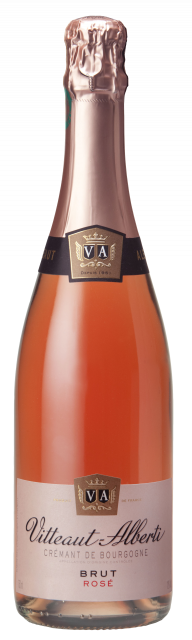
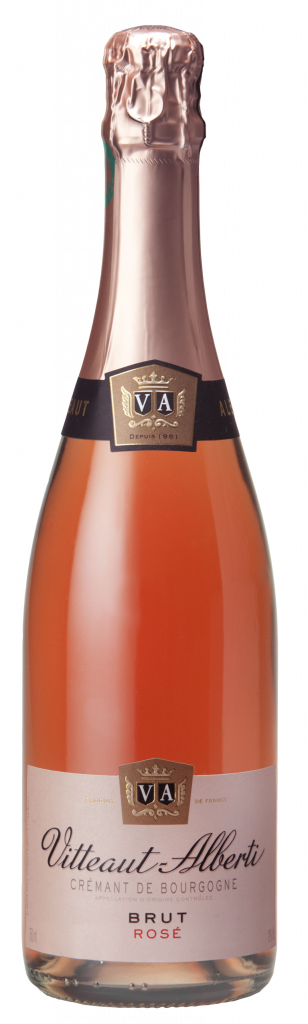
Bright pale pink in color, animated by a fine and persistent effervescence. The nose is seductive in its freshness and intensity, combining aromas of wild strawberry, raspberry and redcurrant, lifted by a delicate floral touch. On the palate, the attack is lively and fruit-forward, driven by bright natural acidity. The texture is silky, with an elegant mousse leading to a clean, refreshing finish. This Crémant Rosé charms with its balance between generosity and finesse, its lightness and precision. Ideal as an aperitif, it also pairs beautifully with fresh, subtle cuisine or red-berry desserts.
Taste profile
Vins blancs frais
Food pairings
Elegant, fruit-driven and refreshing, the Crémant de Bourgogne Rosé Brut from Vitteaut-Alberti lends itself to many pairings, from aperitif through dessert. Its natural vibrancy and red-berry aromas pair beautifully with refined, light and colorful cuisine. It is a perfect match for salmon ceviche with pomegranate, enhancing the dish’s fresh and tangy notes. As a main course, it pairs well with a thin summer vegetable tart with fresh goat cheese, thanks to its delicate bubbles and lively tension on the palate. On the sweet side, it elevates a strawberry cake or a red-berry pavlova, echoing its generous fruit aromas. A festive and versatile wine, ideal for refined yet spontaneous pairings.
Classic food and wine pairings
Aperitif, Desserts, Seafood, Shellfish