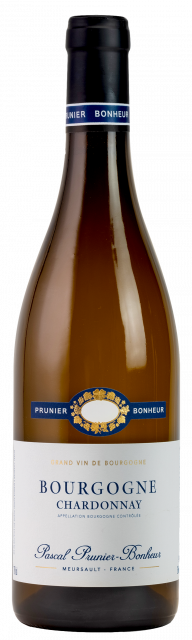
Presentation
Domaine Pascal Prunier-Bonheur, located in Meursault, in the heart of the Côte de Beaune, continues the family heritage of five generations of winegrowers. Pascal Prunier took over the reins of the domaine in 1983 with his wife Christine Bonheur. Today, they manage 8 hectares of vines spread between Saint-Romain, Auxey-Duresses, Monthelie, Meursault, Pommard and Beaune. Passionate about and respectful of their terroirs, they work the soil with great care and use grass cover on certain plots to control the vigor of the vines. At harvest time, a rigorous sorting is carried out to keep only the best grapes. In the cellar, the grapes are matured and vatted for a long time, resulting in wines that are concentrated, complex and well-balanced. This approach gives the wines great ageing potential, while remaining accessible and enjoyable from their youth.
Terroir
The soil is predominantly marly limestone deep, pale soils from which Chardonnay draws deep roots, offering notable complexity for a regional appellation.
In the vineyard
Pascal has long questioned conventional viticultural practices. As early as the 1990s, he joined a group promoting “lutte raisonnée” (sustainable farming). He resumed ploughing, systematically reduced treatment dosages and frequency, and favored organic approaches whenever possible—though without seeking certification, staying measured, pragmatic, and realistic. He works with the lunar calendar to guide both vineyard and cellar tasks, uses sulfur and copper treatments (except in specific cases), and regularly cultivates the soil to manage cover crops and weed control.
Harvest
Grapes are transported to the winery as quickly as possible to preserve freshness.
Winemaking
Grapes are gently pressed using a pneumatic press. Fermentation occurs in oak barrels at low temperatures (18 to 22°C max), preserving finesse and aromatic purity.
Ageing
Ageing is done entirely in oak barrels, with 10 to 25% new oak, depending on the cuvée and vintage. The domaine increasingly uses 350-liter barrels (rather than the classic 228L Burgundy format), ideal for maintaining freshness and enhancing finesse in the whites. After 13 to 18 months, the wine undergoes optional fining and light filtration before bottling. Key interventions such as racking and bottling are also timed according to the lunar cycle.
Varietal
Chardonnay : 100%

Serving
Best enjoyed young, within the first 3 years, when it offers its full range of freshness and aromas.
Serving temperature: 10 to 12°C.
Ageing potential
2 to 3 years
Tasting
Clear and bright, the wine displays a beautiful pale golden hue. The nose releases aromas of white fruits with a hint of vanilla. On the palate, it is both lively and aromatic, with fruit that is round and persistent on the finish.
Visual appearance
Limpid and bright, pale gold in colour.
At nose
White fruit aromas with a touch of vanilla.
On the palate
Lively and expressive, with round, lasting fruit and a fresh, clean finish.
Food pairings
Can be enjoyed on its own as an aperitif, or served with cold terrines, shellfish, or seafood. Its freshness and subtle complexity make it a highly versatile wine at the table.