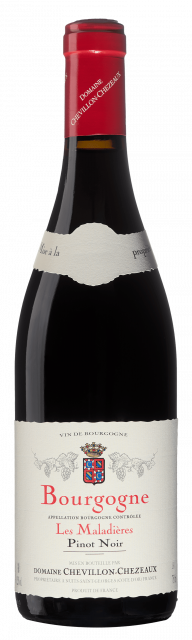
Presentation
Anchored in Nuits-Saint-Georges, the Domaine Chevillon Chezeaux is a true family heritage, cultivating the vine for several generations. Its commitment to preserving the identity of great Burgundian terroirs is reflected in rigorous and environmentally friendly cultural practices. The vines are cultivated in sustainable viticulture, with meticulous soil work favoring optimal maturity of Pinot Noir. Vinification is traditional, with open tank fermentations and prolonged aging in French oak barrels, bringing beautiful aromatic complexity and great depth to the wines. The wines of the domain reveal all the typicity of Nuits-Saint-Georges: beautiful structure, silky tannins, and aromas of black fruits, licorice, and undergrowth. With great aging potential, they are among the great references of Côte de Nuits.
Location
The vines for the Les Maladières cuvée are located just outside Nuits-Saint-Georges, in parcels classified as regional appellation but enjoying a prime location. Facing east-southeast on a gentle slope, they benefit from steady sunlight throughout the day and good air circulation that promotes vine health. This lower-slope area, near more prestigious vineyards, allows for a pure and approachable expression of Pinot Noir while preserving freshness. It’s an ideal setting to craft a generous, accessible Burgundy that stays true to its origins.
Terroir
The soil is composed of ancient alluvium, silt and limestone scree washed down from the upper slopes. This well-balanced structure offers both drainage and moderate water retention, helping the grapes ripen evenly. The resulting fruit has delicate skins, bright red fruit character, and a natural acidity that brings energy to the wine. The terroir yields a Pinot Noir with suppleness, finesse and an honest expression of its regional identity.
In the vineyard
This parcel is farmed with the same exacting standards as the domaine’s Premier Cru vineyards. Soils are cultivated without herbicides, phytosanitary treatments are minimal and carefully adjusted to the vintage, and natural cover crops are managed to balance competition and promote soil life. Each action respects the vine, the rhythm of nature, and the integrity of the ecosystem. The result is a wine that is expressive, balanced, and environmentally responsible, even at the regional level.
Harvest
Harvesting is done by hand, with careful sorting in the vineyard. Grapes are brought in small crates to avoid crushing, then partially destemmed before fermentation. Harvest timing is crucial, aimed at optimal ripeness to preserve fruit, freshness and balance. This rigorous approach to an entry-level wine reflects the domaine’s philosophy of respecting each terroir and producing honest, precise Burgundy without compromise.
Winemaking
Fermentation takes place in open vats using indigenous yeasts, with gentle pump-overs and light punch-downs to extract fruit and color without over-extraction. Maceration lasts around two weeks depending on the year.
Ageing
The wine is aged for 12 months in used oak barrels to maintain freshness and purity of fruit. This maturation softens the tannins and adds complexity without overpowering the wine. Bottling is done with light filtration to retain clarity and finesse.
Varietal
Pinot Noir : 100%
Specifications
Production volume : 52000
Age of vines : 50 years old

Serving
Serve between 14 and 16°C
Ageing potential
5 to 10 years
Tasting
Bourgogne Pinot Noir Les Maladières shows a bright ruby hue. The nose reveals aromas of raspberry, cherry and redcurrant, with subtle floral notes. On the palate, it is smooth, lively and well-balanced, with fine tannins and a crisp finish. This is a charming and easy-drinking wine that reflects the domaine’s style: precise, elegant, and highly enjoyable. Best enjoyed young for its freshness, though it can develop further softness with a few years of ageing.
Food pairings
This wine pairs beautifully with simple yet flavourful dishes like roast chicken with thyme and seasonal vegetables, a mushroom and comté cheese quiche or a semi-soft cheese such as Saint-Nectaire. It also works well with subtly sweet dishes like pork tenderloin glazed with honey and balsamic vinegar, or red fruit desserts like a raspberry tart. Its freshness, fruit and finesse make it a versatile partner for both classic and creative pairings.