Presentation
Ideally located at the foot of the famous Roche de Solutré, in the hamlet of Pouilly, the Trouillet estate, currently managed by William (4th generation), extends over twenty hectares. Its history reflects a beautiful dynamic: Jules Guérin, William's great-grandfather, started with a sharecropping of 4 hectares that his son Jean then exploited for 45 years. The gradual expansion of the estate over generations allows the production of several recognized appellations today: Pouilly-Fuissé, Saint-Véran, Pouilly-Vinzelles, Pouilly-Loché, and Mâcon-Solutré. The vines are cultivated with a respectful approach to the terroir, with meticulous soil work and manual harvesting. Vinifications preserve the aromatic purity of the wines, thanks to low-temperature fermentations and aging on fine lees in tanks or oak barrels. Specificity of the estate: a precise and authentic approach to Chardonnay, which enhances the richness of the Mâconnais terroirs.
Location
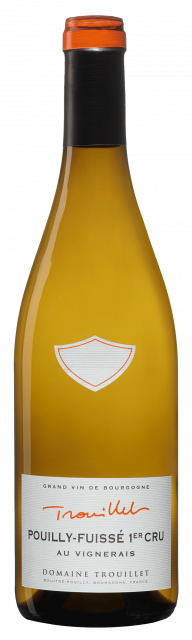
“Au Vignerais” is one of the most emblematic Premier Cru climats of Fuissé, in the heart of the Pouilly-Fuissé appellation. Domaine Trouillet delivers a refined, structured and mineral expression of Chardonnay from this privileged site. Perched on steep slopes with southeast exposure, the vineyard benefits from optimal sun and air flow, allowing for a slow and even ripening that enhances complexity and balance.
Terroir
The soil here is composed of Jurassic marl-limestone with stony outcrops, offering both freshness and depth. These mineral-rich soils bring structure and salinity to the wine while supporting floral finesse. The altitude and slope also promote good ventilation and drainage, helping preserve the purity of the grapes until harvest.
In the vineyard
The vines are trained in Guyot style, with controlled grass cover and gentle soil tilling to respect microbial life. The estate follows sustainable practices, with carefully managed yields and a focus on achieving full phenolic ripeness. Harvest is done entirely by hand, allowing for precise selection of only the ripest, healthiest bunches.
Harvest
Grapes are picked early in the morning to preserve freshness. After a meticulous sorting, the fruit is pressed whole-cluster, allowing the extraction of clear, pure juice without excessive phenolics. Every step is carried out with the aim of preserving the unique identity of the “Au Vignerais” terroir.
Winemaking
Fermentation takes place naturally with indigenous yeasts, in French oak barrels, 20–30% of which are new depending on the vintage. Temperature is carefully controlled to preserve aromatic freshness while allowing for full integration of the oak. No additives are used, aside from a minimal dose of sulfur at bottling.
Ageing
The wine is aged on its fine lees for 10 to 12 months, with light bâtonnage when needed to enhance mouthfeel and aromatic depth. The goal is to build a textured yet energetic wine that highlights the chalky backbone of the terroir. Bottling is carried out without fining and with light filtration, ensuring clarity while retaining authenticity.
Varietal
Chardonnay : 100%
Specifications
Age of vines : 80 years years old
Ingredients & nutrition ›

Serving
Serve between 11°C and 13°C (52–55°F) in large Burgundy white wine glasses. The wine can be enjoyed young for its freshness and precision, but will develop beautifully over 5 to 8 years, gaining richness, depth, and complexity with age.
Ageing potential
5 to 10 years
Tasting
The wine shows a pale yellow color with silvery highlights. The nose opens on delicate white flowers, crisp pear, white peach, and citrus peel, underpinned by a subtle touch of oak. The palate is precise and mineral, driven by a chalky tension that provides both structure and elegance. The finish is long and saline, with a vibrant energy that reflects the Premier Cru’s limestone signature. A wine of purity, vibrancy, and terroir expression.
Food pairings
“Au Vignerais” shines alongside refined dishes. Try it with steamed cod with lemon butter, or a creamy risotto with white mushrooms and aged parmesan. The balance of roundness and salinity also makes it an ideal partner for aged goat cheeses, or even a truffled Brie. A gastronomic white with both poise and depth.