Presentation
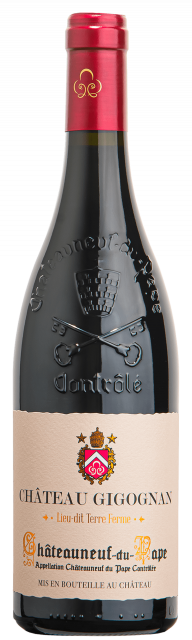
Nestled in Châteauneuf-du-Pape, Château Gigognan is a prestigious estate that enjoys an exceptional terroir of rolled pebbles, sand, and deep clay. The Mediterranean climate further enhances the ripening of its emblematic grapes: Grenache, Syrah, and Mourvèdre. The estate is certified organic and places great importance on sustainable vineyard practices and manual harvesting, ensuring high-quality grapes and healthy soils. In the winery, vinification is tailored to each parcel to highlight terroir typicity. Aging in oak barrels adds complexity while preserving natural elegance and structure. The reds offer intense black fruit, garrigue, and spice aromas with long, refined finishes, while the whites are fresh, nuanced, and expressive. A benchmark for fine Châteauneuf-du-Pape.
Location
These vines are planted on a south-facing slope covered with rolled pebbles, in the lieu-dit “Terre Ferme” in the commune of Bédarrides.
Terroir
This site is renowned for its clay-limestone and clay-sandy soils with sandstone elements.
In the vineyard
The vineyard is managed with great care: thoughtful soil work, use of natural treatments, and strict yield control. The grapes come from a precise parcel selection, with old vines cultivated to encourage deep root systems and optimal expression of the terroir.
Harvest
This cuvée is sourced from low-yielding vines selected from specific parcels.
Winemaking
Fermentation is carried out mainly with whole clusters in temperature-controlled concrete tulip tanks, with gentle extraction through punch-downs. The warm post-fermentation maceration lasts two weeks.
Ageing
The wine is aged for 12 months in large oak foudres (100%), followed by 6 months in concrete tanks.
Varietals
Grenache noir : 60%
Syrah : 25%
Cinsault : 10%
Clairette Rose : 5%
Specifications

Serving
Serving temperature: 14–16°C
Ageing potential
5 to 10 years
Tasting
A true terroir-driven cuvée, this wine comes from old vines rooted in a namesake lieu-dit. Its limestone minerality brings aromatic depth and a saline tension to the palate, complemented by powdery tannins. The result is a wine of great nobility—dark, earthy, with hints of liquorice—and a linear, persistent structure on the palate.
Food pairings
Uncork this wine with a Navarin à l’avignonnaise, truffled pigeon from the Ventoux, a Saint-Marcellin cheese, or a Provençal vegetable tian.