Presentation
Located in Mercurey, in the heart of the Côte Chalonnaise, Domaine Tupinier Bautista is an essential reference for the appellation. Its recent history is marked by the passionate trajectory of Emmanuel Bautista, who took over and transformed the estate in 1997. Of Spanish origin, Emmanuel Bautista arrived in Burgundy in the 1980s, with a deep desire to integrate into this exceptional terroir. Coming from a family where the love of wine was omnipresent, he quickly developed a fascination for Pinot Noir and Burgundian rigor. Learning alongside the elders, he acquired a know-how that he combined with a modern and innovative approach, bringing new dynamism to the estate. Today, the vineyard covers 11 hectares, cultivated with almost obsessive precision. The harvest is exclusively manual, with meticulous sorting of the berries from the moment they are picked. In the cellar, the work is done gently: vinifications are carried out by gravity, avoiding any aggressive pumping. Aging takes place in natural cellars dug into the rock, ensuring a slow and harmonious evolution of the wines. The Mercurey reds, aged in French oak barrels, reveal a beautiful density and aromatic power, blending black fruits, spices, and undergrowth notes. The palate is ample, with silky tannins and a persistent finish, offering wines designed for aging. The distinctive feature of the estate lies in Emmanuel Bautista's vision, who has managed to marry Burgundian heritage with his Mediterranean roots to create wines with a strong identity, where the precision of the terroir is combined with a generosity of texture and depth.
Location
This wine comes from a 0.80-hectare vineyard plot with a South-East exposure.
Terroir
Clay-limestone soil.
In the vineyard
Soil is worked regularly and yields are carefully managed throughout the growing season. Sustainable viticultural practices are employed to preserve the balance of the vines. Harvesting is done manually or mechanically depending on vintage conditions, with strict selection of the best grapes.
Harvest
Grapes are harvested by hand and carefully sorted directly in the vineyard.
Winemaking
Whole-cluster pressing, followed by light settling. Alcoholic and malolactic fermentation occur in oak barrels. The wine is aged for 12 months in 350L barrels, with 30% new oak (including one- and two-year-old barrels).
Ageing
The wine is aged for 12 months in oak barrels, with 30% new oak. Ageing takes place on fine lees to enhance texture and aromatic complexity. The barrels used are 350L, allowing a gentle integration of wood. Regular bâtonnage is performed depending on the vintage profile.
Varietal
Chardonnay : 100%
Specifications
Age of vines : 50 years old

Serving
10-12°C
Ageing potential
3 to 5 years
Tasting
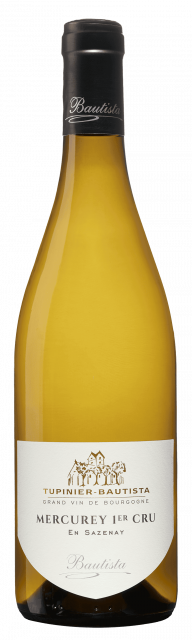
Made primarily from Chardonnay, this Mercurey Premier Cru Sazenay white reveals an elegant bouquet of white flowers (acacia, hawthorn), golden apple, and ripe pear, with discreet buttery and vanilla notes from well-integrated oak. Hints of fresh almond or hazelnut may also appear. The palate opens with lively acidity, bringing vibrancy and freshness, then evolves into a more ample and complex structure with a slightly creamy texture, never dominated by oak. The wine’s chalky minerality, typical of the Mercurey (Sazenay) terroir, leads to a long, saline finish with a subtle flinty edge. A well-balanced wine that combines freshness, aromatic richness, and length.
Food pairings
Thanks to its freshness, minerality, and slightly buttery texture, this Mercurey white pairs beautifully with:
Pan-seared scallops with a lemony sauce or light beurre blanc, served on a bed of seasonal vegetables the wine’s acidity cuts through the richness and enhances the shellfish’s delicacy.
Wild mushroom risotto (ceps, chanterelles), with parmesan or Beaufort cheese echoing the wine’s roundness while maintaining contrast.
Sole meunière or roasted cod, with brown butter and capers a refined pairing that highlights the wine’s finesse and saline finish.
Thin vegetable tart with goat cheese, ideal as an appetizer or light summer starter, where the wine’s lively acidity balances the sweetness of grilled vegetables.