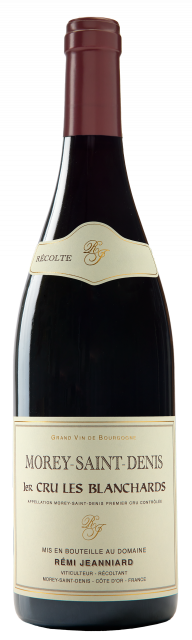
Presentation
After 18 years alongside his father, Rémi Jeanniard founded his own estate in 2004. Located in Morey-Saint-Denis, he now cultivates 5.8 hectares, spread between Morey-Saint-Denis, Chambolle-Musigny, and Gevrey-Chambertin. His philosophy is based on respect for the terroir and nature, with cultivation without herbicides and mechanically worked soils. Harvesting is manual, and vinifications seek the purest expression of Pinot Noir. The estate offers a wide range of wines, from regional appellations to Grand Crus, including the famous Clos de la Roche. Its distinctive feature? Precise vinification, without woody makeup, to express the finesse and depth of Pinot Noir from the Côte de Nuits.
Location
The “Clos des Ormes” climat is one of the Premier Cru classified lieux-dits in the Morey-Saint-Denis appellation, in the heart of the Côte de Nuits.
Terroir
The soil is classically clay-limestone, often mixed with gravel or pebbles depending on the parcel. This composition ensures excellent natural drainage and allows Pinot Noir to ripen under ideal conditions, delivering depth, tension, and a strong sense of place.
In the vineyard
The vines dedicated to this cuvée benefit from mature plantings and meticulous vineyard management. The domaine employs strict yield limitation, careful canopy control, and rigorous sorting during harvest to ensure only top-quality fruit is selected. These practices faithfully reflect the character of the Clos des Ormes site while preserving the purity of the Pinot Noir grape.
Harvest
Grapes are harvested entirely by hand or undergo thorough sorting to retain only healthy, perfectly ripe bunches. This ensures preservation of the wine’s freshness, aromatic finesse, and structural integrity—hallmarks of fine Premier Cru reds.
Winemaking
The winemaking process follows the traditional methods of the Côte de Nuits: total or partial destemming depending on the vintage, fermentation in temperature-controlled stainless steel or wooden vats, with adapted pump-overs and punch-downs to maintain precision and balance.
Ageing
The wine is aged for about 12 months in French oak barrels, with around 25% new oak. This careful maturation integrates oak subtly while maintaining the finesse and elegance of the Pinot Noir.
Varietal
Pinot Noir : 100%
Specifications
Production volume : 3 680
Age of vines : 50 years old

Serving
Recommended temperature: 15–16 °C to highlight its structure and elegance.
Ageing potential
5 to 10 years
Tasting
This Premier Cru reveals an intense ruby robe with garnet highlights, clear and radiant. The nose is expressive and pure, delivering ripe black fruits — blackberry, cassis, black cherry — enhanced by subtle spices (white pepper, clove) and delicate oak integration. With aeration, floral notes (violet, peony) and a mineral edge emerge, testifying to the wine's terroir-driven complexity and refinement.
On the palate, the wine opens with a smooth, almost silky attack, leading to a concentrated yet balanced mid-palate. The tannins are present but finely woven, giving the wine a solid frame without harshness. The aromatic richness perceived on the nose continues, supported by a juicy fruit core, refreshing acidity, and a persistent, slightly chalky finish. This is a complete wine of place — deep, gourmand, and built for graceful aging.
Food pairings
Thanks to its refined tannins and aromatic depth, this Premier Cru pairs wonderfully with elegant, flavourful cuisine. Ideal matches include herb-crusted beef fillet, roasted veal chop, or seared duck breast. Game birds such as pigeon or quail roasted with gentle spices also resonate beautifully with its tannic structure and nuanced profile.
For vegetarian dishes, umami-rich textures are perfect: forest mushroom risotto, creamy truffle polenta, or a root vegetable gratin. With cheese, choose well-aged, semi-hard varieties like mature Comté, mountain Tomme, or truffle Brie. Avoid overly spicy, sweet, or intensely smoky dishes, which could overwhelm the wine’s finesse.