Presentation
Nestled in the heart of the prestigious Moulin-à-Vent cru, Domaine du Guéret stands as a true ambassador of its terroir. The vineyard lies on soils formed by the slow disintegration of pink granite, resulting in a sandy, nutrient-poor substratum virtually devoid of clay. This geological austerity forces the vines to dig deep, naturally limiting yields and enhancing concentration, structure, and aromatic depth in the grapes. The soils are unusually rich in iron and manganese oxides-key signatures of the appellation. Manganese enhances the wines’ tannic structure and deep color, while iron contributes a distinctive mineral tension and spicy character. The result is dense, vigorous, age-worthy wines, marked by power and elegance. Owned by the Favre-Curtelin family, the estate is run today by Catherine Delaunay-Favre and her sisters. Their philosophy is rooted in a parcel-by-parcel approach and deep respect for nature: sustainable viticulture, hand harvesting, meticulous grape selection, long macerations, whole-cluster fermentations, and tailored ageing. The estate’s wines are striking in their intensity—black fruits, violet, liquorice, a refined tannic frame and a majestic length. Regularly praised in the Guide Hachette des Vins, Domaine du Guéret's cuvées fully express the granitic nobility of Moulin-à-Vent, with a style both bold and contemporary.
Terroir
Soils formed on granitic bedrock, composed primarily of sandy decomposed granite.
Harvest
Harvesting is done by hand.
Winemaking
The maceration lasts between 10 and 15 days.
Ageing
Ageing is partially carried out in oak barrels in 18th-century cellars.
Varietal
Gamay : 100%
Serving
Serve 14 to 16°C
Ageing potential
3 to 5 years
Tasting
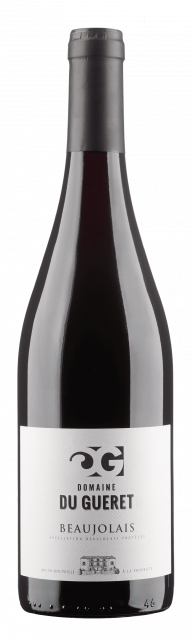
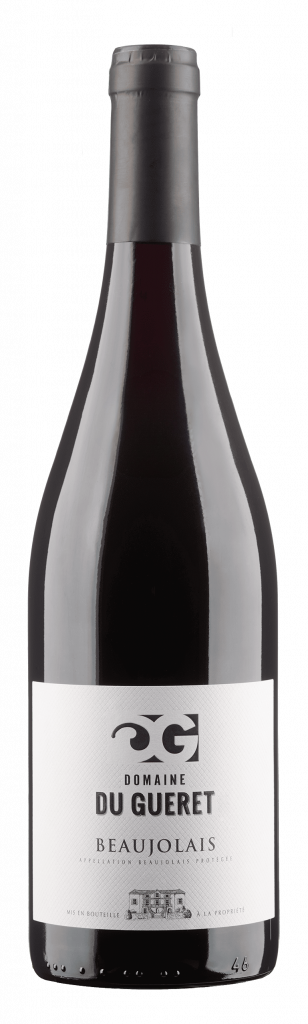
Made from the Gamay grape, this red Beaujolais from Domaine du Guéret embodies the classic character of regional cuvées: a bright ruby hue, an expressive nose of fresh red berries — cherry, redcurrant, raspberry — with floral hints of peony. On the palate, it’s light, refreshing, and supple, with fine, well-integrated tannins.
Food pairings
Its easy-drinking, fruit-forward profile makes it a perfect match for casual and convivial meals: serve it as an apéritif with a charcuterie board, alongside a quiche Lorraine, a vegetable tian, or roast chicken. For more adventurous pairings, try it with a vegetarian bo bun, a light moussaka, or herb-crusted pork tenderloin. Slightly chilled, it reveals all its freshness and charm.