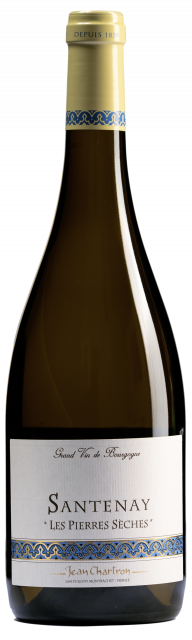
Presentation
Founded in 1859, Domaine Jean Chartron is a historic reference in Puligny-Montrachet. For five generations, the Chartron family has cultivated one of the most beautiful viticultural heritages of Côte de Beaune, with 14 hectares of vines, mostly classified as Premiers and Grands Crus. The estate has several exceptional monopolies: Puligny-Montrachet 1er Cru Clos de la Pucelle Puligny-Montrachet 1er Cru Clos du Cailleret Chevalier-Montrachet Grand Cru Clos des Chevaliers (monopoly since 1917) Jean-Michel Chartron and his sister Anne-Laure perpetuate reasoned viticulture, with careful soil work and precise vinifications, favoring the pure expression of Chardonnay. The wines stand out for their elegance, mineral tension, and remarkable aging capacity.
Location
This cuvée, “Les Pierres Sèches,” is aptly named: the vines are planted in the upper slopes of Santenay, on very limestone-rich soils.
Terroir
Clay-limestone soils.
In the vineyard
Natural grass cover maintained after harvest until the end of March. Compost and organo-mineral amendments applied in late autumn to early winter. Poussard pruning from replanting for better sap flow. Light surface tillage, mechanical inter-row hoeing, and manual weeding around the vines. Canopy trimming to 1.30 meters.
Harvest
Manual harvest.
Winemaking
Fermentation in oak barrels (30% new oak / 70% barrels aged 1 to 5 years).
Ageing
Aged on fine lees for 12 months in barrels, followed by 4 months in tanks.
Varietal
Chardonnay : 100%
Specifications
Production volume : 90000
Age of vines : 40 ans years old

Serving
Serving Temperature: 13 to 15°C
Ageing potential
3 to 5 years
Tasting
Santenay Les Pierres Sèches Blanc opens with a clear, pale yellow robe highlighted by soft golden reflections. The nose is refined and expressive, revealing aromas of ripe stone fruits (white peach, apricot), bright citrus notes (zesty lemon), and a subtle touch of vanilla from oak ageing. The chalky minerality of the terroir subtly underpins the wine’s roundness. On the palate, it offers generous texture—ample, well-structured, and lifted by vibrant freshness. Firm but smooth, it concludes with lingering notes of white fruits and wet stone.
Food pairings
This expressive, richly textured white pairs beautifully with refined dishes: generous seafood (shellfish, crustaceans), noble fish in a buttery sauce, or poultry in creamy preparations. It also complements delicate veal dishes. For something more adventurous, try it with a mushroom risotto or a fine vegetable tart. On the cheese board, opt for soft washed-rind cheeses or creamy goat cheeses to highlight its minerality and roundness.