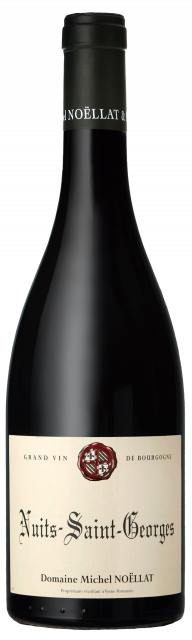
Presentation
Located in Vosne-Romanée, Domaine Michel Noëllat traces its roots back to the 19th century with Félix Noëllat, a family pioneer. Since then, five generations have succeeded, combining heritage and modernity. The estate's evolution is illustrated by constant investments: in 1980, a vaulted stone cellar was dug under the property, and in 2007, an ultra-modern winery equipped with thermo-regulated stainless steel tanks was established. Since 2012, vineyard management has been handled by Sébastien Noëllat (responsible for viticulture and vinification) and his cousin Sophie, who oversees the commercial side. The vines, cultivated using sustainable practices, cover several prestigious appellations, including Vosne-Romanée, Chambolle-Musigny, and Clos de Vougeot. The reds are aged for 18 months in oak barrels, with meticulous work on extraction and aging. What makes it famous? Powerful and refined wines with a distinctive aromatic signature, blending bright fruit and silky textures.
Location
The Domaine Michel Noëllat’s Nuits-Saint-Georges plots lie in the southern part of the Côte de Nuits, mainly on the namesake village’s slopes, between 240 and 300 meters altitude. Facing east, the vineyards enjoy ideal sunlight and cool nights, encouraging slow, balanced ripening of the Pinot Noir. This sector is known for producing wines with depth, structure, and a strong sense of place.
Terroir
The soil promotes excellent natural drainage, allowing Pinot Noir to fully express its potential in this climate. Exposure, slope, and subsoil all contribute to optimal grape ripening and the distinctive character of the wine.
In the vineyard
The vines for this cuvée are cultivated with great care: yield control, canopy management, and meticulous sorting during harvest. This rigorous approach ensures high-quality grapes, essential for faithfully reflecting the Nuits-Saint-Georges terroir.
Harvest
Harvesting is done entirely by hand, with rigorous sorting in the vineyard and again at the winery. Grapes are collected in small crates to preserve integrity and avoid crushing. Each plot is vinified separately to maintain the identity of its origin.
Winemaking
Vinification follows a traditional method, starting with a cold maceration followed by fermentation lasting 18 to 20 days. Gentle pump-overs and light punch-downs extract colour and tannin delicately.
Ageing
Ageing takes place over 15 to 16 months in French oak barrels, 20 to 25% of which are new, to build structure without masking fruit. Bottling is done with minimal filtration.
Varietal
Pinot Noir : 100%
Specifications
Production volume : 80 000
Age of vines : 70 years old

Serving
Serving temperature: around 14–15 °C to best highlight the wine’s fruit and finesse.
Ageing potential
3 to 5 years
Tasting
This Nuits-Saint-Georges "Les Villages" reveals a beautiful, deep ruby color with garnet highlights, clear and bright. The nose is both open and complex, offering ripe red fruit aromas, cherry, redcurrant, raspberry, that evolve toward deeper notes of black fruits, sweet spices, and subtle oak depending on the vintage. Delicate floral hints (violet, peony) and a touch of underbrush emerge with aeration, showcasing the richness of the terroir.
On the palate, the attack is smooth, followed by a well-defined structure supported by fine, well-integrated tannins. The balance between freshness and substance is remarkable: the wine is linear, precise, with lingering aromatic persistence. The flavor profile is dominated by clean, juicy fruit, backed by a light minerality and a refined spicy note. A wine that is both elegant, easy to drink, and a true expression of the appellation.
Food pairings
Thanks to its balanced structure and expressive fruit, this Nuits-Saint-Georges pairs beautifully with flavorful yet elegant cuisine. It’s a great match for roasted poultry, duck breast with figs, or herb-crusted veal roast. More tender cuts such as pork tenderloin or grilled veal chop also harmonize well with the wine’s finesse.
For vegetarian dishes, consider a risotto with Paris mushrooms or chanterelles, a tart with roasted vegetables, or creamy herb polenta. As for cheese, go for semi-hard, mildly salty varieties like young Comté, Saint-Nectaire, or a farmhouse Tomme.