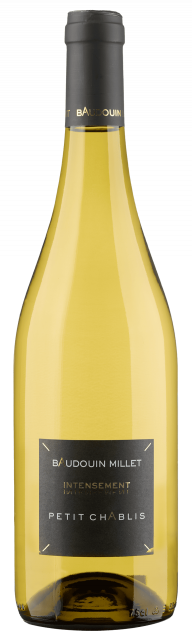
Presentation
The Domaine Baudouin Millet, founded in the 1980s in Tonnerre, is the legacy of a bold reconversion, transforming cereal lands into a vineyard exclusively dedicated to Chardonnay. Unlike many domains in Chablis located further north, Baudouin Millet benefits from a slightly warmer climate, promoting a more complete maturity of the grapes. Its 16 hectares of vines, mostly in Petit Chablis and Chablis, are rooted in Kimmeridgian clay-limestone soils, offering a beautiful mineral tension to the wines. Committed to sustainable viticulture, the domain practices meticulous soil work and controlled grassing to preserve biodiversity and limit erosion. The vinifications favor stainless steel to enhance the freshness and pure expression of the fruit, a choice that contrasts with more traditional domains that opt for wood aging. The result: crystalline, tense, and precise wines, with bright aromas of citrus and white flowers, distinguished by exceptional vivacity and clarity.
Location
Domaine Baudouin Millet’s Petit Chablis comes from plots located on the higher plateaus and outer slopes of the Chablis vineyard area, mainly to the northwest of the village. These parcels enjoy a cooler climate and excellent natural airflow, which helps preserve the grapes’ acidity and encourages slow ripening. The slightly higher altitude provides soft sunlight and enhances the freshness of the Chardonnay. These natural conditions result in a wine that is crisp, expressive, and marked by vibrant energy.
Terroir
The soils in this area are based on Portlandian limestone—hard, shallow, and younger than the Kimmeridgian marl found in core Chablis terroirs. This soil type produces lighter, more approachable wines with immediate appeal. The calcareous structure offers great drainage and enhances the wine’s purity and precision. Petit Chablis expresses bright citrus, white flowers, and a mineral backbone. This terroir is ideal for crafting refreshing, sharp wines with lively tension and aromatic clarity.
In the vineyard
The estate follows sustainable viticulture across all its vineyards. Soils are worked mechanically without herbicides, and natural grassing is encouraged to maintain soil structure and biodiversity. Treatments are used sparingly and adapted to each vintage. Vineyard management is guided by careful observation, with manual work such as pruning and leaf thinning to maintain balance. This respectful approach ensures healthy, balanced fruit that authentically reflects its terroir—even in regional appellations.
Harvest
Harvesting is carried out at optimal ripeness, typically by machine with strict quality control at reception. Grapes are quickly sorted and gently pressed in fractions to extract only the purest juice. This ensures the freshness and clarity necessary for the wine’s final profile. Each parcel is vinified separately to preserve its individuality. Such attention at harvest preserves the crisp, energetic style that defines the Petit Chablis appellation.
Winemaking
Fermentation takes place in temperature-controlled stainless steel tanks to preserve the freshness and varietal character of the Chardonnay. Fermentations are slow and as natural as possible, using indigenous yeasts when feasible.
Ageing
The wine is aged on fine lees for 6 to 8 months without bâtonnage, maintaining its linearity while adding subtle texture. No oak is used, allowing the pure minerality of the terroir to shine through. Bottling takes place in spring after light filtration.
Varietal
Chardonnay : 100%
Specifications
Age of vines : 35 years old

Serving
Serving temperature: 10–12°C
Ageing potential
2 to 3 years
Tasting
This Petit Chablis “Les Villages” displays a bright pale-yellow robe with green highlights. The nose is lively and precise, offering lemon zest, green apple, white blossoms, and flint. On the palate, the attack is sharp and vibrant, with clear acidity and a clean, mineral finish. It’s a straightforward, focused wine that refreshes and awakens the senses. Perfect as an aperitif or with light dishes, it shows best within 2 to 3 years to capture its youthful aromatic expression.
Visual appearance
Limpid and brilliant pale yellow with green reflections
At nose
Citrus fruits and floral scents
On the palate
Rich and aromatic entry, structured and lively with a refined mineral finish
Food pairings
This Petit Chablis pairs perfectly with fresh, vegetal, or seafood-based dishes. Try it with sea bream tartare with green mango and lime—it amplifies the wine’s zesty side. It also shines with zucchini ravioli filled with goat cheese and mint, topped with a lemon vinaigrette. For dessert, it’s unexpectedly delightful with roasted pineapple carpaccio seasoned with Timut pepper and lemon zest. A sharp and gourmet white wine, perfect for bold and original pairings.