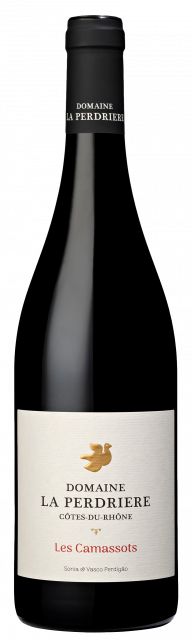
Presentation
Nestled at the foot of the prestigious Dentelles de Montmirail in Sablet, the vines of Domaine La Perdrière thrive on 27 hectares of organically farmed land. The estate was taken over in 2010 by Vasco Perdigao, supported by his wife Sonia, a former nurse who retrained as a winemaker.
Vasco honed his craft with passion over several years in the renowned vineyards of the Northern Rhône. Yet it was in the southern part of the Rhône Valley that he chose to settle and fully express his vision as a vigneron.
The year 2024 marks a turning point for the estate: the winery has been expanded and modernized to improve working conditions and optimize the quality of the wines throughout their vinification, ageing, and storage phases. A new visual identity — including redesigned labels — affirms this transformation.
The name Domaine Chamfort is now a thing of the past, making way for Domaine La Perdrière. This new name is a tribute to the Perdigao family name — meaning “partridge” in both Provençal and Portuguese. La Perdrière is thus the place where partridges find shelter — and symbolically, a home for our wines as well.
Location
This wine is a blend of grapes from three distinct parcels:
The Grenache comes from a clay-limestone plot in Sablet, near the border of Gigondas.
The Syrah is sourced from the “Les Camassots” area on the Sablet plain, with sandy-silty soils.
The Cinsault grows at higher altitude on Mont Bayon in Séguret, on clay-limestone soils.
Terroir
A harmonious trio of terroirs: deep clay-limestone for structure, sandy-silt for softness and fruit, and altitude-driven freshness from Mont Bayon, creating a layered and expressive wine.
In the vineyard
The estate has been certified organic since the 2021 harvest. Traditional soil management includes winter mounding of the vines and spring ploughing. Compost is applied every three years, alternating with organic amendments.
Harvest
Combination of manual and mechanical harvesting.
Winemaking
In the cellar, Vasco employs long macerations to gently extract the best from the grapes.
Ageing
Aged for 12 to 18 months entirely in concrete vats
Varietals
Grenache : 50%
Syrah : 40%
Cinsault : 10%
Specifications
Age of vines : 35 years old

Serving
Recommended serving temperature: 14–16 °C, to preserve the wine’s freshness and reveal its full aromatic expression.
Ageing potential
3 to 5 years
Tasting
Les Camassots reveals a bright ruby color with purple highlights. The nose opens on ripe black fruits (blackcurrant, plum), balanced by fresh red cherry and lifted by delicate smoky or grilled notes, occasionally with a hint of soft pepper. The attack is clean, juicy and inviting. The wine shows good structure without heaviness, supported by silky, integrated tannins. A refreshing undercurrent brings balance to the ripe fruit, and the finish lingers on black fruits and gentle spice, with a subtle toasted nuance adding depth.
Visual appearance
Vivid ruby with violet hints.
At nose
Black fruits, red cherry, soft spice, toasted notes.
On the palate
Supple and structured, fruity and fresh, with a smooth texture and lightly spicy finish.
Food pairings
Les Camassots is a versatile wine, ideal with both everyday fare and more flavorful dishes, as long as they allow the wine to express its personality:
Grilled or roasted meats: roast leg of lamb, herb-marinated pork chops, or grilled ribeye.
Slow-cooked rustic dishes: beef and onions, Provençal daube, light game stew, or a mushroom ragout.
Pressed or moderately aged cheeses: young Cantal, mild Comté, or semi-aged Beaufort.
Mediterranean cuisine: grilled vegetables (peppers, eggplant), ratatouille, moussaka, or homemade pizza with mushrooms and olives.