Presentation
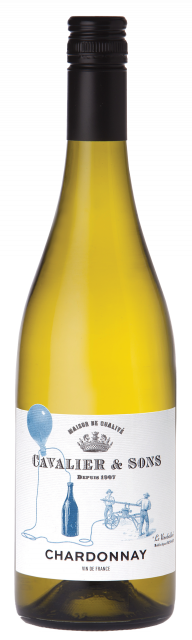
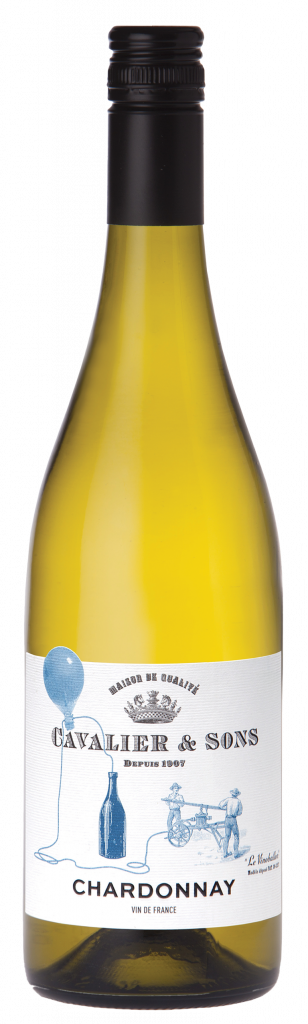
In 1907, Jules Cavalier, a brilliant inventor of some of the most ingenious equipment ever developed for the wine industry, planted his first vineyards to experiment with new machines. Today, his inventions are no longer used, but his descendants have expanded the vineyards in several of France's best terroirs and now produce some of the country's most renowned wines.
Terroir
This wine comes from French vineyards on sloping land aged 15 to 25 years, grown on clay-limestone soils.
In the vineyard
Chardonnay is a grape variety with relatively early bud break, sensitive to spring frosts in cold continental terroirs. It also ripens early. Moderately fertile soils, mainly limestone or marl-rich, with loose limestone sediments, are best suited to Chardonnay. This grape variety prefers soils with good water retention capacity: extreme drought would be harmful to it. In deep soils, Chardonnay develops a richer, fuller-bodied, and more pleasant character.
Winemaking
Direct pressing of the grapes. Fermentation for 10 to 12 days in temperature-controlled vats, followed by 6 months of aging on natural lees with frequent stirring (the lees are mixed with the wine to give it fatness and richness).
Varietal
Chardonnay : 100%
Specifications
Tasting
This refreshing and complex Chardonnay is very aromatic and full of ripe fruits: pear and dried banana are followed by woody notes.
Food pairings
To be enjoyed as an aperitif and with seafood, fish accompanied by a creamy sauce, and goat cheese.