Presentation
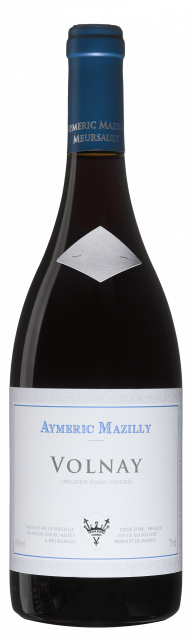
Maison Aymeric Mazilly is a winery located in Burgundy, France. Founded in 2004 by Aymeric Mazilly, it specializes in the production of great white wines from the Côte de Beaune. The Mazilly family has been rooted in the region for several generations. Pierre Mazilly took over the family estate in the 1950s, and his son Frédéric and grandson Aymeric have continued the tradition1. The estate covers some 19 hectares, mainly in the Hautes Côtes de Beaune, but also in prestigious appellations such as Gevrey-Chambertin, Pommard, Volnay and Meursault. The wines produced by Maison Aymeric Mazilly are renowned for their quality. The red wines are fruity with a well-controlled woodiness, while the white wines are rich, balanced and structured. Every year, their wines win medals in prestigious competitions such as the Concours des Grands Vins de France.
Terroir
Parcels located on clay-limestone soils.
In the vineyard
Vineyard work is mainly carried out manually. After the harvest, in November and December, begins the long process of pre-pruning, which involves cutting the vine shoots. The smoke from burning canes is a familiar sight in the vineyard landscape during winter. From the feast of Saint Vincent on January 22 until mid-March, the final pruning takes place to regulate grape quantity and ensure the best wine quality. In the end, only one branch (the "baguette") remains on each vine and is tied to a wire (called "pliage de baguette").
The soil is fully tilled. Hoeing and inter-vine weeding are regularly performed to remove weeds between the vines. Starting in May, as the vines begin to grow, strict debudding is carried out to limit grape yield and improve ventilation. Trellising and tying follow shortly after to support the growing vegetation.
Three to four trimmings are done throughout the season. In summer, leaf thinning (especially for Chardonnay) is practiced. Different treatments are used to protect vines from diseases such as mildew and powdery mildew, but every intervention is reasoned, with constant concern for environmental respect.
Harvest
Starting in September and lasting around fifteen days, the grape harvest begins when the fruit is rich in sugar and the tannins reach optimal phenolic maturity. It’s an intense period where the entire team is busy in the vineyard and winery, all contributing to the success of the new vintage.
Winemaking
The harvested grapes are sorted, destemmed, and placed in open vats for maceration and fermentation, which lasts about 15 to 20 days. Daily punch-downs (pigeage) are performed to immerse the cap and extract color. Fermentation temperatures are closely monitored to avoid any yeast blockages. After alcoholic fermentation, the pomace is pressed, and the wine is blended and transferred into barrels.
Ageing
Barrels are regularly topped up during the ageing process. In spring, after malolactic fermentation, the wines are racked, blended, and returned to barrels. Ageing lasts between 12 and 18 months depending on the vintage. In Burgundy, the barrel is called a “pièce bourguignonne.” Made from French oak (merrain), it holds 228 liters. At the estate, 20% new barrels are used for red wine and 25% for white wine. A new barrel brings more tannins and oak character. A barrel is used no more than 5 or 6 times.
Varietal
Pinot Noir : 100%
Specifications
Age of vines : 30 years old
Serving
16°C
Ageing potential
5 to 10 years
Tasting
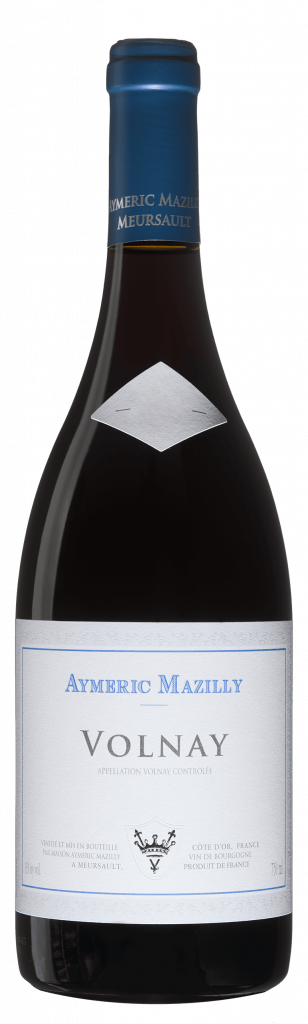
Volnay is often described as the most feminine red wine of Burgundy. Bright ruby or light garnet in color, its aromas sing of violet, redcurrant, cherry, and with age, spices, game, and stewed prune. Its concentration and complexity express themselves with delicacy and nuance. In addition to its straightforward flavor, it opens up early thanks to its precocious character. Fresh on the attack, warm on the finish, it feels like biting into ripe fruit and breathing in its flesh.
Food pairings
Pairs beautifully with roast poultry dishes, simply roasted or stewed feathered game, and even with couscous or tagine featuring meat or poultry.