Presentation
Domaine Pascal Prunier-Bonheur, located in Meursault, in the heart of the Côte de Beaune, continues the family heritage of five generations of winegrowers. Pascal Prunier took over the reins of the domaine in 1983 with his wife Christine Bonheur. Today, they manage 8 hectares of vines spread between Saint-Romain, Auxey-Duresses, Monthelie, Meursault, Pommard and Beaune. Passionate about and respectful of their terroirs, they work the soil with great care and use grass cover on certain plots to control the vigor of the vines. At harvest time, a rigorous sorting is carried out to keep only the best grapes. In the cellar, the grapes are matured and vatted for a long time, resulting in wines that are concentrated, complex and well-balanced. This approach gives the wines great ageing potential, while remaining accessible and enjoyable from their youth.
Location
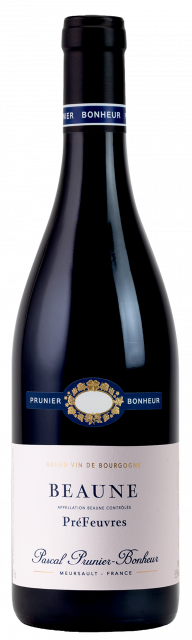
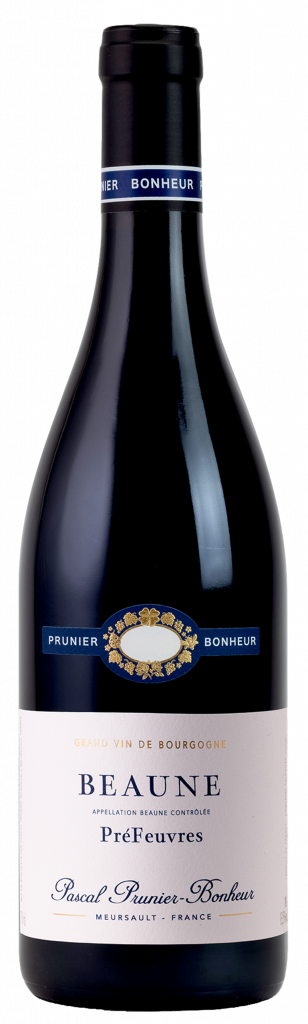
This cuvée is a blend of two parcels: Beaune Les Prévoles and Beaune Les Bons Feuvres. Geographically close, these vineyards complement each other: the sixty-year-old vines of Bons Feuvres bring wisdom and elegance, while the young vines of Prévoles add energy and vibrancy to the wine.
Terroir
Located at the foot of the slope, these parcels lie in the continuation of Pommard and border a Premier Cru zone. The soils are predominantly clay-based.
In the vineyard
Pascal began questioning conventional viticultural practices in the 1990s and joined a sustainable farming group. He reintroduced soil plowing and systematically reduced both the dosage and frequency of treatments, favoring organic methods whenever possible—though without formal certification. Guided by a balanced and realistic approach, he follows the lunar calendar for vineyard and cellar tasks. Treatments are limited to sulfur and copper unless specific issues arise, and soil work is used to manage cover crops.
Harvest
Manual harvest in small perforated crates.
Winemaking
Depending on the vintage, whole-cluster fermentation may vary up to full destemming. Grapes are cooled to 12°C at vatting for a cold maceration lasting 3 to 6 days. The temperature then rises gradually, peaking at 32–34°C. Regular pump-overs ensure even extraction throughout fermentation. Indigenous yeasts are used to highlight the terroir’s character. Maceration lasts 15 to 21 days, with the decision to press based on tasting.
Ageing
The wine is aged for 15 to 18 months entirely in French oak barrels, with 15–25% new oak for Premier Cru wines and 10–20% for village-level wines. The oak is used to enhance complexity without overpowering the terroir. Before bottling, a light filtration is performed. All key interventions—racking and bottling—are scheduled according to the lunar cycle.
Varietal
Pinot Noir : 100%
Specifications
Age of vines : 60 years old
Serving
This wine can be enjoyed from its second year in bottle and will age gracefully for up to 8 years. Serving temperature: 15 to 16°C
Ageing potential
5 to 10 years
Tasting
With a deep ruby robe and garnet highlights, this wine reveals aromas of dark fruits on the nose. The palate is silky, marked by velvety tannins and a beautifully fruity, slightly musky aromatic profile.
Food pairings
This wine pairs beautifully with white meats, as well as classic Burgundian dishes such as boeuf bourguignon or œufs en meurette. It also complements well-aged cooked cheeses.