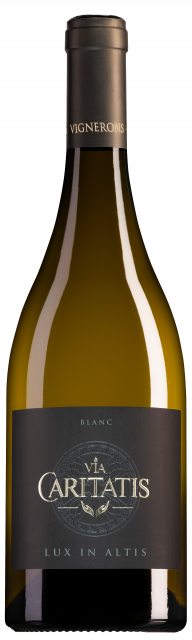
Presentation
The Via Caritatis estate is a unique winemaking project born from the collaboration between the monks and nuns of the Sainte‑Madeleine du Barroux Abbey and passionate winegrowers from the Mont Ventoux region in southeastern France. Rooted in a tradition dating back to the 14th century, the estate draws its inspiration from the spiritual and agricultural heritage of former papal lands. Through demanding, respectful viticulture, Via Caritatis produces wines under the AOP Ventoux designation, showcasing the richness of Mediterranean grape varieties such as Syrah, Grenache, and Clairette. Much of the vineyard work is done by hand, with a strong focus on quality over quantity. The monks and nuns themselves cultivate 10 hectares of vines on the slopes of Mont Ventoux, between 350 and 700 meters in altitude, alongside around 80 partner winegrowers who share the same values and dedication. The estate’s goal is to craft wines of excellence, imbued with meaning and deep human values, while supporting local farming families and celebrating a remarkable terroir. Via Caritatis thus represents a rare alliance of spirituality, tradition, and modernity, where wine becomes a true message of charity and beauty — the fruit of a collective effort driven by ethical and qualitative standards.
Location
Lux Blanc is a prestigious white wine from the AOP Ventoux appellation, crafted by Via Caritatis. It embodies the idea of light and radiance sought by the monks and winemakers of the estate. This wine reflects the meeting point of an exceptional terroir, meticulous work in the vineyard and cellar, and a deep intention to create a wine that is structured, elegant, and capable of evolving in complexity over time.
Terroir
Lux Blanc is made primarily from a blend of Clairette (~70%) and Roussanne (~30%).
The terroir is diverse:
The Clairette comes from older vines planted in deep clay-limestone soils, which provide aromatic power, and from younger vines on sandy-silty soils, contributing freshness and acidity.
The Roussanne, planted at high density on clay-limestone soil at the foot of the Saint-Sépulcre chapel in Beaumont-du-Ventoux, adds richness, breadth, and excellent ageing potential.
Harvest
The grapes are harvested by hand with very rigorous sorting, keeping only healthy grapes at full ripeness.
Winemaking
The grapes undergo direct pneumatic pressing without destemming, followed by cold sedimentation to clarify the must. Fermentation takes place slowly at controlled temperatures in stainless steel tanks (or a combination of stainless steel and concrete, depending on the parcel).
Ageing
The wine is aged on fine lees for 6 to 8 months. A portion of the Roussanne is aged in oak barrels with regular bâtonnage (lees stirring), adding aromatic complexity, roundness, and structure. It is then blended with the tank-aged portion prior to bottling.
Varietals
Clairette : 70%
Roussanne : 30%
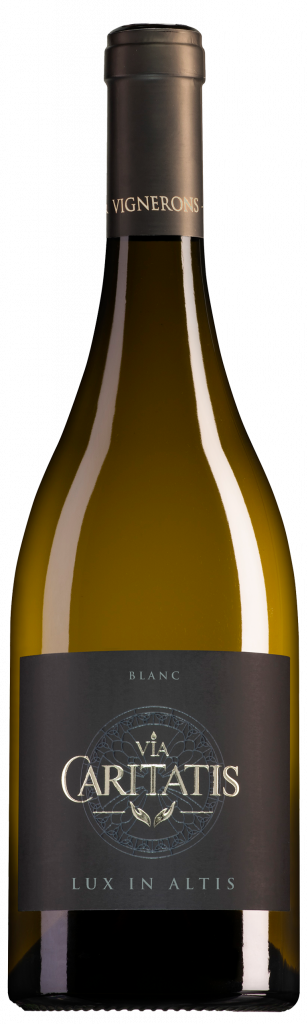
Serving
Recommended serving temperature: 12 to 13 °C (53–55°F) to allow all aromas to unfold without suppressing the freshness.
Ageing potential
5 to 10 years
Tasting
The wine displays a brilliant golden color with green highlights. The nose reveals a complex aromatic profile, blending white fruits, exotic fruits, and hints of mint or anise. On the palate, it is full-bodied and round, while maintaining vibrant freshness. The balance is highly harmonious, with a long, elegant finish marked by notes of toasted almond and, at times, brioche — highlighting the finesse of the oak and the wine's aromatic richness.
Visual appearance
The wine shows a brilliant golden color with green highlights.
At nose
The nose reveals a complex aromatic palette, combining white fruits, exotic fruits, and menthol or aniseed notes.
On the palate
The mouthfeel is full and round, while maintaining vibrant freshness. The balance is highly harmonious, with a long and elegant finish, offering subtle hints of toasted almond, and occasionally brioche, underscoring the finesse of the oak and the wine’s aromatic richness.
Food pairings
This wine pairs beautifully with shellfish, noble fish such as monkfish or sea bass, and seafood, as well as well-aged cheeses and dishes with delicate sauces. It also complements poultry in light cream sauces. Thanks to its finesse, it is equally suitable for a gourmet aperitif or a peaceful moment of tasting.