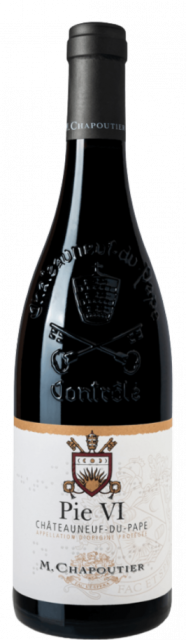
Terroir
The 'Pie VI' draws its strength from the low terraces of the Rhône, an emblematic terroir of Châteauneuf-du-Pape. The soils, composed of ancient alluvium and rolled pebbles resting on Cretaceous marls, allow for excellent thermal regulation. This configuration promotes a slow and homogeneous maturation of the berries, offering the wine power, depth, and structure, while respecting the identity of Grenache.
Harvest
The grape harvest is done by hand, with meticulous sorting in the vineyard to keep only the healthiest bunches.
Winemaking
The winemaking process takes place in raw, uncoated concrete tanks, for a pure and unadulterated expression of the fruit.
Ageing
Breeding, entirely conducted in tanks, favors freshness, aromatic intensity, and readability of the terroir, far from the excesses of wood. A minimalist approach in the service of authenticity.
Varietals
Grenache noir
Syrah
Specifications
Alcohol content : 14 % vol.

Tasting
The dress is dense, with a deep red color and ruby reflections. The nose opens up to a beautiful maturity of fruit: blackberry, blackcurrant, blueberry jelly, enhanced by hints of bitter cocoa, mild pepper, and garrigue herbs. In the mouth, the attack is ample, carried by velvety tannins and generous material. The heart of the mouth evokes a cream of black fruits, underlined by a fine freshness. The long and structured finish reveals accents of dark chocolate and sweet spices, the signature of a Châteauneuf-du-Pape that is both refined and approachable. Tailored for aging, this Châteauneuf-du-Pape already reveals a nice balance, but will gain in depth and complexity over time. It can be tasted from today after a slight decanting, or patiently waited for 10 to 15 years. Serve around 14–16°C to reveal all its richness.
Food pairings
A wine of this stature deserves dishes with deep flavors and generous textures. It will enhance a long-simmered osso buco, a lamb curry with mild spices, or a shoulder of lamb confit with herbs. For a characterful vegetarian option, try it with a moussaka with roasted eggplants. It can also accompany a platter of Iberian charcuterie or a blue-veined cheese like Bleu de Gex.
Reviews
James Suckling
Jancis Robinson