Presentation
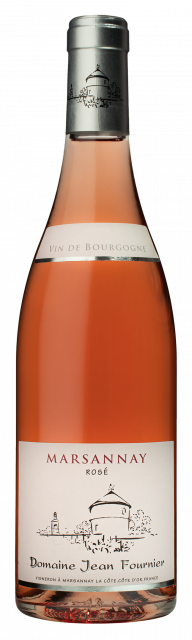
Founded more than three centuries ago, Maison Jean Fournier is one of the historic estates of Marsannay, an emblematic appellation of the Côte de Nuits. Taken over by Laurent Fournier, the property is today a model of commitment to organic and biodynamic viticulture, applied with great rigor to enhance the identity of Burgundian terroirs. The estate extends over 16 hectares, mainly in the Marsannay, Fixin, and Gevrey-Chambertin appellations. It is one of the pioneers in promoting Marsannay white wines, which express beautiful minerality here. The reds, made from Pinot Noir from massal selections, are vinified in gentle infusion, with minimal extraction to reveal all the finesse of the grape variety. The signature of the estate lies in a low-intervention approach, producing chiseled, precise wines with great aromatic purity.
Location
The parcels used for Domaine Jean Fournier’s rosé come from across the Marsannay appellation, located in the northern Côte de Nuits, spanning the villages of Marsannay-la-Côte, Couchey and Chenôve. These east and southeast-facing slopes offer optimal sun exposure and moderate inclines, allowing for full ripeness of Pinot Noir while retaining freshness. Marsannay is the only village-level AOC in Burgundy authorized to produce rosé, and the estate has earned a strong reputation for its precise and meticulous interpretation of the style.
Terroir
The soils are primarily composed of calcareous marl and clay-limestone scree. This geological diversity brings natural balance to the wine, offering structure, minerality and finesse. The selected plots are chosen for their ability to yield bright, fresh Pinot Noir grapes, perfectly suited for delicate, aromatic rosé winemaking. The result is a wine that reflects both its varietal identity and its terroir with clarity.
In the vineyard
The vines are farmed organically (certified), with great attention paid to soil health, biodiversity and natural balance. No herbicides or synthetic products are used. Soils are worked manually or mechanically, and some biodynamic practices are also implemented. The goal is to produce healthy, expressive grapes that genuinely reflect the vintage and their origin, in line with the estate’s minimal intervention philosophy.
Harvest
Harvesting is done by hand with careful selection. The rosé is made by direct pressing to preserve the purity and delicacy of the fruit.
Winemaking
After gentle pressing, the juice is cold-settled and fermented at low temperature in stainless steel tanks to retain aromatic freshness.
Ageing
The wine is aged on fine lees for about 6 months without bâtonnage, and no fining is done. Bottling takes place in the spring following the harvest.
Varietal
Pinot Noir : 100%
Specifications
Age of vines : 24 à 54 years old

Serving
Ideal serving temperature: 10–12°C
Ageing potential
2 to 3 years
Tasting
Marsannay Rosé reveals a pale, salmon-hued colour with brilliant highlights. The nose is expressive and delicate, with aromas of red berries (redcurrant, wild strawberry), white flowers and citrus zest. The palate is vibrant, fresh, and textured, offering both volume and precision. The finish is long, saline and persistent. This gastronomic rosé combines elegance and energy, and can age gracefully for two to three years while retaining its charm.
Food pairings
This wine is a perfect match for a wide variety of dishes, from aperitif to main course. It pairs wonderfully with prawn salad and citrus dressing, sea bream ceviche with coriander, or a tart of heirloom tomatoes and fresh goat cheese. For cheese, try a young ewe’s milk cheese or a light tomme. On the sweet side, it complements a strawberry and basil tart or a pink grapefruit panna cotta. A characterful rosé, ideal for fresh, seasonal and colourful cuisine.