Presentation
Since 1875, the vine has been at the heart of the family history of Domaine Lathuilière Gravallon, located in the heart of Beaujolais. Cathy and Cédric Lathuilière continue this tradition today with passion and commitment. The estate, certified High Environmental Value (HVE) Level 3, spans several prestigious appellations: Morgon, Brouilly, and Chénas. Here, viticulture listens to the terroir, with a reasoned approach, natural grass cover, and exclusively manual harvesting. Each parcel is meticulously cared for to ensure a pure expression of Gamay, the king grape variety of Beaujolais. Vinification, without additives and very low intervention, follows a traditional semi-carbonic method that reveals the fruity intensity of the wines. Long fermentations and aging in oak barrels and demi-muids refine the cuvées and bring beautiful complexity. The originality of the estate lies in its approach that is both traditional and innovative. For over 10 years, no herbicides have been applied to the most mechanizable parcels, and vinification focuses on the search for finesse and authenticity, offering Morgon and Brouilly that are both gourmet and elegant, faithful reflections of their exceptional terroirs.
Location
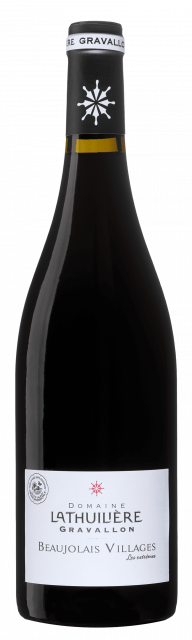
The Beaujolais-Villages Les Extrêmes cuvée comes from the Beaujolais-Villages Protected Designation of Origin (PDO), which includes selected hillside vineyards known for their ideal exposure and the finesse of their soils. This red wine is made exclusively from Gamay, the emblematic grape variety of the region’s red wines. Les Extrêmes stands out for its intense fruit expression and its ability to vividly reflect the typicity of Gamay grown on granitic soils.
Terroir
The granitic and sandy-clay soils contribute to this wine’s distinct minerality and marked freshness, bringing both tension and elegance to the final cuvée.
In the vineyard
From pruning to harvest, each stage is handled with precision: manual work on the soils, strict yield control, and sustainable viticultural practices aimed at preserving the balance of the vine. Depending on the parcel, harvesting is carried out either manually or mechanically, always with the aim of respecting the fruit's integrity and full aromatic potential.
Harvest
The grapes are mostly hand-harvested, allowing for a meticulous selection of berries before fermentation. This process guarantees both fruit purity and optimum ripeness.
Winemaking
Vinification follows the great Beaujolais tradition, favoring fruit expression and freshness. Les Extrêmes typically undergoes a short maceration, sometimes semi-carbonic, designed to preserve the delicate aromatic profile of the Gamay while limiting excessive tannin extraction. Malolactic fermentation occurs naturally, with minimal intervention, yielding a supple texture and smooth mouthfeel. Oenological inputs are kept to a minimum to let the purity of fruit and terroir speak for themselves.
Ageing
Aging takes place primarily in concrete or stainless steel vats, with occasional brief aging in oak barrels depending on the vintage. The result is a balanced wine with alcohol content typically around 13–13.5%, slightly varying by year.
Varietal
Gamay : 100%
Specifications
Production volume : 5 000
Age of vines : 40 years old
Ingredients & nutrition ›

Serving
Les Extrêmes is best enjoyed young, between 1 and 4 years after the vintage, when it fully expresses its vibrant fruit and freshness. Under optimal storage conditions, some vintages may develop slight complexity up to the fifth year without losing their charm.
Ageing potential
2 to 3 years
Tasting
Visually, this Beaujolais-Villages displays a brilliant, deep garnet hue, signaling elegance and vibrancy without heaviness. On the nose, Les Extrêmes unveils an expressive aromatic bouquet led by red fruits — cherry, raspberry, and wild strawberry — intertwined with subtle floral notes and a delicate spicy edge. The overall impression is fresh and inviting, promising a highly enjoyable tasting experience. On the palate, the wine opens with a bright, fruit-forward attack, followed by a supple texture supported by fine, integrated tannins. Its acidity is lively yet balanced, lending energy and freshness throughout. The red fruit aromas linger beautifully, leading to a clean, persistent finish. This is a highly drinkable wine, harmoniously combining pleasure, finesse, and precision.
Food pairings
This red wine proves to be extremely versatile at the table. Its freshness and fruit-forward character pair beautifully with a variety of charcuterie, roast poultry, or grilled pork cuts. It also complements Mediterranean dishes such as a vegetable tian or a classic tomato‑mozzarella pizza, and holds up well alongside mildly spiced or aromatic cuisine. On the cheese front, it balances wonderfully with young or soft-ripened cheeses, such as Tomme or Neufchâtel heart. The wine’s bright acidity cuts through the richness, creating gourmet, well-balanced pairings.