Presentation
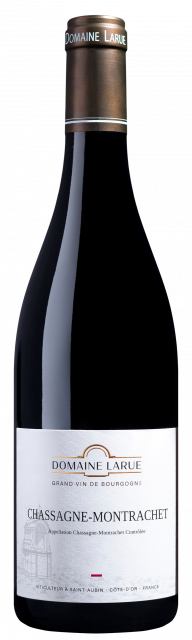
Located in Saint-Aubin, the family's birthplace, Domaine Larue spans 17 hectares and covers four prestigious villages: Saint-Aubin, Chassagne-Montrachet, Puligny-Montrachet, and Aloxe-Corton. Managed by Denis and Didier Larue, accompanied by their sons Bruno and Vivien, this family estate combines tradition and modernity. The new generations bring a renewed vision of viticultural practices while remaining faithful to the values passed down for several decades. The meticulous work in the vineyards, combining reasoned cultivation and respect for the terroir, allows for the production of wines of great finesse and pure expression. Vinification is precise and low-intervention, with carefully controlled barrel aging. The estate's wines stand out for their balance, aromatic intensity, and aging potential, perfectly illustrating the nobility of the Côte de Beaune terroirs. The harmonious association between ancestral know-how and innovation ensures the wines of the estate a unique signature, marked by elegance and aromatic depth.
Location
The terroir is located in the southern part of the appellation. The east-facing plots lie flat at an altitude of 220 meters on deep clay-limestone soil. The earth is fine and light. These old Pinot Noir vines were planted between 1941 and 1976, at a density of 10,000 vines/ha over a surface area of 1.50 hectares.
Terroir
A deep clay-limestone soil.
In the vineyard
Pruned in Cordon de Royat style, then debudded in spring, the vines are carefully managed. The soil is lightly tilled and one-third of each plot is grass-covered. During the summer, disease control is carried out using a sustainable approach. In July, manual leaf-thinning is performed. Lateral shoots (called "gourmands") are removed. The grapes benefit from full sun exposure, with better aeration and healthier bunches.
Winemaking
After careful monitoring of ripeness, the grapes are hand-harvested and transported in small perforated crates to the winery. The grapes arrive on a vibrating sorting table where insects and dry berries are removed. The fruit then passes along a conveyor belt where 4 to 6 people remove any clusters that might affect the quality of the cuvée. The harvest is partially destemmed, with 20–30% whole clusters retained. The grapes are transferred to vats via conveyor belts. After a 3 to 5 day cold maceration, alcoholic fermentation begins. During the active phase of fermentation, the cap is punched down 3 times a day. Fermentation then slows for a refinement period. The must is tasted daily. After 15 to 20 days, the marc is pressed; free-run juices are settled and gravity-fed into oak barrels. The entire cuvée is aged in barrels, 30% of which are renewed each year.
Ageing
After 12 months of ageing on fine lees, the wine is blended in a temperature-controlled stainless steel tank for an additional 6 months of ageing. A light fining is done prior to bottling.
Varietal
Pinot Noir : 100%
Specifications
Age of vines : 40 to 80 years old

Serving
Serving Temperature: 12–15°C
Ageing potential
5 to 10 years
Tasting
Chassagne-Montrachet Village Rouge has a clear, intense, and deep color. The nose offers aromas of fresh red berries with delicate, well-integrated oak. The palate is silky on the attack. Tannins are present but fine, within a powerful structure. The finish is firm.
Visual appearance
Clear, intense, deep color
At nose
Fresh red fruits, subtle oak
On the palate
Silky entry, fine tannins, powerful body, firm finish
Food pairings
Chassagne-Montrachet is a red Burgundy wine that pairs very well with a variety of dishes. Here are some suggested food pairings:
Red Meats: Grilled or roasted lamb, as well as beef, are excellent choices.
Poultry: Duck, especially with spiced preparations like curry or tandoori, pairs well with this wine.
Game: Feathered and furred game, such as pheasant or venison, are also great companions.
Cheese: Aged cheeses like Époisses, Soumaintrain, or Morbier complement the wine beautifully.