Presentation
Located in the commune of Marsannay-La-Côte, in the Côte de Nuits, 5km south of Dijon, the domaine has grown over the generations. Vines have been handed down in this family since 1800, thanks to their ancestors. Today, Valérie and Philippe manage and develop the estate, cultivating 23 hectares of vines in the Marsannay, Fixin and Gevrey-Chambertin appellations. For over 40 years, the domaine has been a member of the Vignerons Indépendants de France confederation.
Location
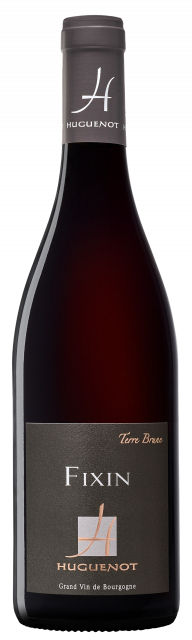
Terres Brunes is a wine crafted from several parcels located in the southern part of the appellation. These east- and southeast-facing plots are situated on the foothills, on soils composed of clay, silt, and gravel deposits.
Terroir
Soils composed of silty-clay-sandy textures and cone-shaped gravel deposits.
In the vineyard
Soil and vine management are essential: moderate plowing begins at the end of winter to aerate the soil and stimulate microbial life. Compost tailored to each plot is applied to naturally restart the plant’s vegetative cycle.
All vineyard work—debudding, trellising, and leaf-thinning—is carried out meticulously throughout the season, with constant attention to quality.
These precision practices help control yields and concentrate the fruit for deeper expression.
Harvest
Harvesting is performed at the optimal stage of grape maturity.
Winemaking
Grapes are picked entirely by hand. They are sorted first in the vineyard, then again in the winery by a team of 8 people working on two sorting tables. Grapes arrive in 15-kg perforated crates to preserve the fruit’s integrity.
The first table removes moisture, dry berries, and any small insects (ladybugs, earwigs, etc.). The second allows the team to select only the best bunches and to retain stems when whole-cluster fermentation is desired.
Depending on the vintage and cuvée, 20% to 50% of whole clusters are kept. Sorting is a crucial step to producing great wines.
After sorting, the grapes are placed in temperature-controlled vats via stainless steel bins for a cold maceration (perfect for Pinot Noir) lasting 7 to 10 days.
Fermentation is traditional and natural, relying on the grape’s indigenous yeasts.
Alcoholic fermentation occurs naturally and lasts 10 to 15 days, with 1 to 2 tastings per day to monitor the process.
Gentle punch-downs and pump-overs are carried out based on our sensory evaluation to ensure a soft, precise extraction.
Fermentation temperatures are carefully managed to preserve balance and finesse.
The marc is then gently pressed in a pneumatic press, and the wine is transferred by gravity to preserve its integrity.
Ageing
The wine is aged for 12 to 18 months, depending on the vintage, in oak barrels from the finest French forests (Central France).
New oak accounts for 10% to 30% of the barrels, depending on the appellation.
Red wines are aged in traditional 228-liter Burgundy barrels from various coopers and forests, with medium to deep toasting to reveal the core of the wood.
Varietal
Pinot Noir : 100%
Specifications
Production volume : 12 000
Age of vines : 50 years old

Serving
Serving temperature: 16 to 18°C
Ageing potential
5 to 10 years
Tasting
Elegant on the nose with notes of red berries and a lovely floral intensity. The palate is well-structured, with liveliness and depth of texture.
Food pairings
Pair with generous cuts of meat such as braised pork, well-marbled ribeye, or poultry stew—classic or spiced with curry or tandoori flavors.
Its aromatic finesse and elegant finish also make it a perfect match for more creative pairings like paella, tapas, or nems.
For cheeses, this Fixin wine pairs beautifully with the delicate softness of Chaource, the nutty fruitiness of Comté, or the bold character of Époisses.