Presentation
The Via Caritatis estate is a unique winemaking project born from the collaboration between the monks and nuns of the Sainte‑Madeleine du Barroux Abbey and passionate winegrowers from the Mont Ventoux region in southeastern France. Rooted in a tradition dating back to the 14th century, the estate draws its inspiration from the spiritual and agricultural heritage of former papal lands. Through demanding, respectful viticulture, Via Caritatis produces wines under the AOP Ventoux designation, showcasing the richness of Mediterranean grape varieties such as Syrah, Grenache, and Clairette. Much of the vineyard work is done by hand, with a strong focus on quality over quantity. The monks and nuns themselves cultivate 10 hectares of vines on the slopes of Mont Ventoux, between 350 and 700 meters in altitude, alongside around 80 partner winegrowers who share the same values and dedication. The estate’s goal is to craft wines of excellence, imbued with meaning and deep human values, while supporting local farming families and celebrating a remarkable terroir. Via Caritatis thus represents a rare alliance of spirituality, tradition, and modernity, where wine becomes a true message of charity and beauty — the fruit of a collective effort driven by ethical and qualitative standards.
Location
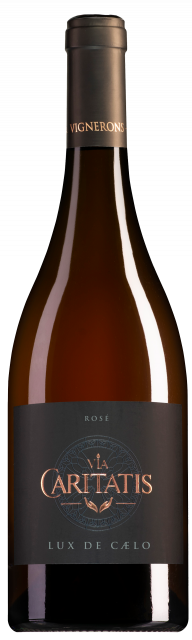
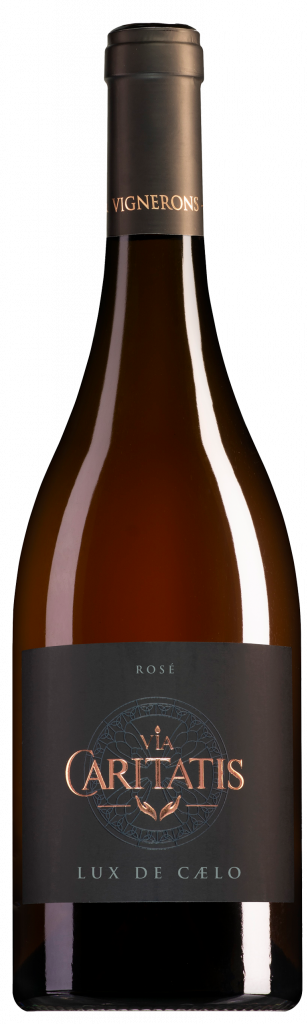
Lux Rosé is an exceptional rosé wine produced under the AOP Ventoux appellation by Via Caritatis. This cuvée is crafted to combine elegance, aromatic purity, and finesse, while expressing the distinctive character of the Ventoux terroir. As part of the “Lux” range, it seeks to reflect brightness and harmony in the glass, offering more structure and depth than classic light rosés.
Terroir
Lux Rosé is made predominantly from Grenache (≈ 70–80%) blended with Syrah or Cinsault (≈ 20–30%), depending on the parcel. The vineyards are planted at 300–500 meters altitude, on well-exposed slopes with good drainage and marked diurnal temperature variation. This location ensures natural freshness while allowing full aromatic maturity of the Mediterranean grape varieties.
In the vineyard
Sustainable vineyard practices are applied to preserve biodiversity and soil vitality, including selective treatments, manual canopy management, and careful soil work adapted to each vintage.
Harvest
Harvesting is done by hand, with strict sorting to select only healthy, fully ripe grapes.
Winemaking
Grapes are gently and immediately pressed without destemming to limit extraction and retain delicacy. Fermentation takes place in stainless steel or concrete vats at low temperature, to preserve the wine’s subtle aromatics.
Ageing
The wine is aged on fine lees for 4 to 6 months, with light bâtonnage (lees stirring) to enhance texture, roundness, and mouthfeel, without weighing down its aromatic elegance.
Varietals
Grenache noir : 80%
Syrah : 10%
Cinsault : 10%
Serving
Best served between 10 and 12 °C (50–54°F) to highlight its full aromatic palette while maintaining its delicacy.
Ageing potential
2 to 3 years
Tasting
Visually, Lux Rosé displays a pale rose petal hue, bright and clear. The nose is elegant and expressive, revealing notes of wild strawberries, raspberries, citrus, orange blossom, and at times, a subtle herbal nuance. On the palate, the wine shows freshness, a silky texture, and a fine balance between liveliness and roundness. The finish is long and saline, lifted by a light zesty or spicy touch that extends the tasting experience.
Visual appearance
Clear, pale rose color with luminous reflections.
At nose
Wild berries, citrus zest, orange blossom, gentle herbs.
On the palate
Fresh and smooth, silky texture, long saline finish with zest-like lift.
Food pairings
This refined rosé pairs beautifully with elegant summer dishes: shellfish salads, grilled fish, light white meats, or Mediterranean cuisine with herbs. It also complements citrus-based recipes and lightly sweet desserts featuring red fruits. A perfect apéritif wine, it offers a delightful introduction to any meal.