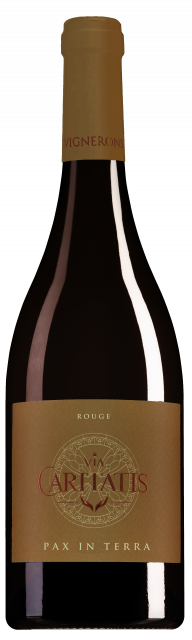
Presentation
The Via Caritatis estate is a unique winemaking project born from the collaboration between the monks and nuns of the Sainte‑Madeleine du Barroux Abbey and passionate winegrowers from the Mont Ventoux region in southeastern France. Rooted in a tradition dating back to the 14th century, the estate draws its inspiration from the spiritual and agricultural heritage of former papal lands. Through demanding, respectful viticulture, Via Caritatis produces wines under the AOP Ventoux designation, showcasing the richness of Mediterranean grape varieties such as Syrah, Grenache, and Clairette. Much of the vineyard work is done by hand, with a strong focus on quality over quantity. The monks and nuns themselves cultivate 10 hectares of vines on the slopes of Mont Ventoux, between 350 and 700 meters in altitude, alongside around 80 partner winegrowers who share the same values and dedication. The estate’s goal is to craft wines of excellence, imbued with meaning and deep human values, while supporting local farming families and celebrating a remarkable terroir. Via Caritatis thus represents a rare alliance of spirituality, tradition, and modernity, where wine becomes a true message of charity and beauty — the fruit of a collective effort driven by ethical and qualitative standards.
Location
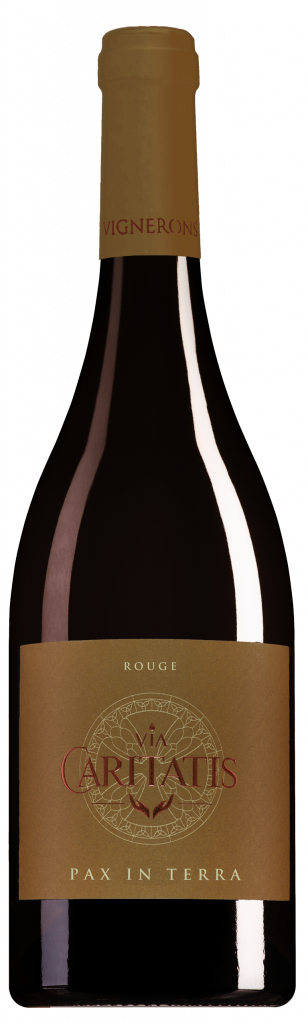
Via Caritatis – Pax is a red wine from the AOP Ventoux, located in the Provence-Alpes-Côte d’Azur region of southeastern France.
Terroir
This wine is primarily made from Grenache, Syrah, and Mourvèdre—grape varieties emblematic of southern Rhône blends. The terroir features clay-limestone soils scattered with rounded pebbles, typical of the Mont Ventoux region. The Mediterranean climate, marked by significant diurnal temperature variation, promotes optimal ripening of the grapes. The vineyards are located between 300 and 600 meters above sea level, lending the wine a distinctive freshness and balance.
In the vineyard
Sustainable practices are applied to maintain soil health and biodiversity. Key vineyard stages include canopy management, cover cropping, and targeted treatments to minimize environmental impact and support vine balance throughout the growing season.
Harvest
Grapes are hand-harvested with a strict sorting process to select only healthy, ripe berries, ensuring purity and quality from the start.
Winemaking
Winemaking typically involves manual harvesting to preserve grape integrity. Alcoholic fermentation is carefully temperature-controlled to retain fruit character. The maceration phase lasts approximately 15 to 20 days, allowing for the extraction of color, aroma, and tannins while maintaining finesse.
Ageing
Ageing is carried out in stainless steel tanks or oak barrels, depending on the vintage, for 6 to 12 months. This helps refine the wine’s structure and brings in subtle woody and spicy notes without overwhelming the fruit.
Varietals
Grenache noir : 70%
Syrah : 30%
Serving
Serve between 16 and 18°C (60–64°F) for optimal expression. Decanting is not necessary but short aeration will enhance complexity, especially in younger vintages.
Ageing potential
3 to 5 years
Tasting
In the glass, Via Caritatis – Pax Rouge shows a deep, intense red color with violet reflections. The nose is generous and expressive, offering notes of ripe red fruits like raspberry and black cherry, combined with spices and a hint of garrigue herbs—a signature of the Ventoux region. On the palate, the wine is balanced and harmonious, with supple yet structured tannins, a fresh, lifted mid-palate, and an elegant, long finish that interweaves fruit and spice. This is a medium- to full-bodied red, ideal for those who enjoy wines that are both structured and accessible.
Visual appearance
Deep ruby with violet highlights, brilliant and intense.
At nose
Raspberry, black cherry, sweet spices, Mediterranean herbs.
On the palate
Silky texture, balanced structure, fresh acidity, and a long, elegant, fruity-spicy finish.
Food pairings
This red wine pairs beautifully with flavorful, rich dishes such as grilled or sauced red meats, lamb, game, and aged cheeses. It also complements herb-rich Mediterranean cuisine, including grilled vegetables, ratatouille, or Provencal-style stews.