Presentation
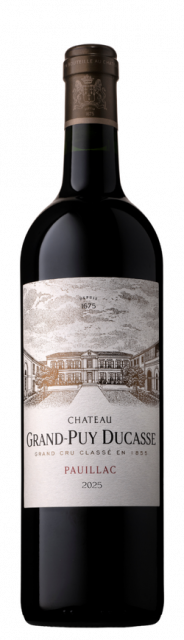
It all began when Arnaud Ducasse acquired a "modest" house on the banks of the river in Pauillac in 1675; he then had no idea that it would become a large estate that would remain in his family for nearly three centuries. Pierre Ducasse, a lawyer passionate about wine, then significantly expanded the land over three parishes - Pauillac, Saint-Lambert, and Saint-Sauveur - as well as over three lordships: Lafite, Latour, and Beychevelle. In 1820, his son built the technical facilities of the Château facing the Gironde Estuary. A bold decision at the time that made Grand-Puy Ducasse the only Château vinifying its wines in the heart of the town of Pauillac for 200 years. In 1855, the estate was included in the prestigious classification of Grands Crus Classés and with its 40 hectares spread over 11 types of soils, it can be considered the most representative vineyard of the diversity of terroirs in Pauillac. Following the acquisition of the property by CA Grands Crus, a subsidiary of Crédit Agricole group, an ambitious optimization plan was launched, starting in 2005 in the vineyard. It will be consolidated by the ongoing construction of a new vat house and new aging cellars and will complete this large-scale project under the code name "Renaissance Project". Pushing the demand even further, that is the motto of Château Grand-Puy Ducasse and its team, led by Anne Le Naour and Benjamin Cassoulet.
Terroir
The 40 hectares of the vineyard are spread over three large plots located on siliceous-gravelly Garonne gravels of the Pauillac appellation. The vines are adjacent, to the North, to Mouton, Lafite, and Pontet-Canet. In the center, they occupy a part of the Bourdieu de Grand-Puy. To the south, they are located on the plateau of Saint-Lambert.
In the vineyard
During the grape harvest, which, according to the Médoc tradition, is done by hand, a first sorting of the grapes is carried out on a table, directly in the vineyard.
Winemaking
Upon arrival at the winery, the harvest is sorted one last time by hand with the utmost care, then each batch is vinified separately: total destemming, light crushing, and vinification in temperature-controlled stainless steel tanks.
Ageing
18 months of aging in French oak barrels.
Varietals
Cabernet-sauvignon : 66%
Merlot : 31%
Petit verdot : 3%
Specifications
Alcohol content : 13.00 % vol.
Yield : 31 hL/ha
Age of vines : 25 years old
Tasting
"Medium- to full-bodied with precise, delineated fruit. There is a savory touch and a firm finish, with overall balance between structure and fruit. Finesse through but plenty behind." - James Suckling
Reviews
James Suckling
Jeb Dunnuck
Decanter
Vinous